The RELiVE project officially kicks off
RELiVE Consortium
On 1 April 2026, the partners of RELiVE (Reliable & Extended Lifetime for Circular and Modular Battery Electric Vehicles) officially launched the project. RELiVE is a research and innovation project funded by the European Union's Horizon Europe programme under Grant n° 101270720. From April 2026 to 2030, ten partners from six European countries will work on a single mission: making electric vehicles last longer, by giving more value and several lives to their components.
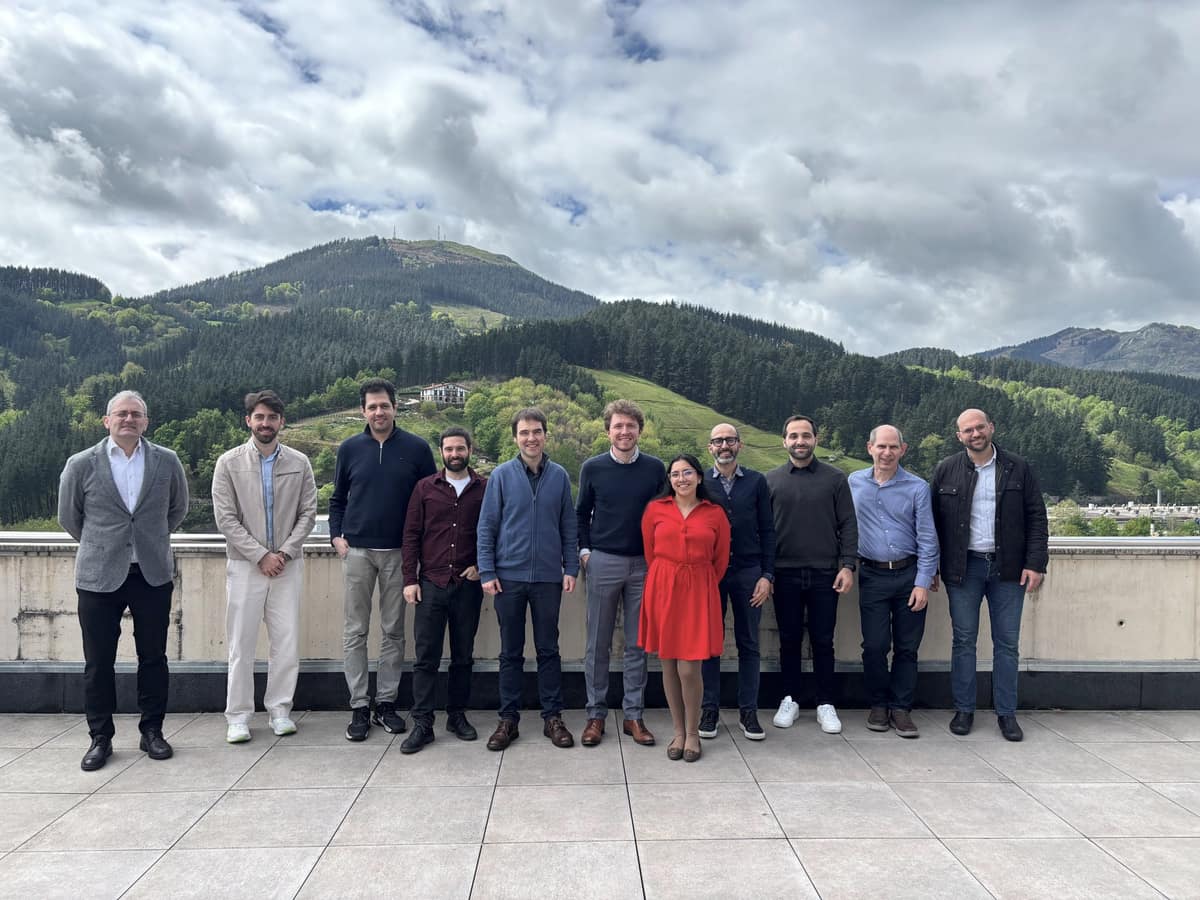
A kick-off meeting in the Basque Country
The consortium gathered for its kick-off meeting on 14 April 2026, hosted by Mondragon University in Arrasate-Mondragón, Spain, with several partners joining online. After each partner introduced its organisation, the coordination team presented the project overview, and representatives of CINEA, the European Climate, Infrastructure and Environment Executive Agency, presented the European Commission's expectations for the project.
Each work package leader then walked the consortium through the objectives, planning, milestones and deliverables of their work package. The day continued with the first General Assembly and Technical Committee of the project, and ended with a visit to Mondragon University's laboratories. The consortium will meet again online in September or October 2026.
Why RELiVE
Electric vehicles are central to decarbonising road transport, but three obstacles hold them back: they remain expensive to buy, they depend on imported critical raw materials, and they are hard to repair. When a battery or an e-motor degrades today, the standard answer is a full replacement, or even the end of the vehicle itself.
RELiVE takes the opposite approach: design the powertrain from the start so that it can last, be repaired at module level, and have its components reused.
Measurable goals
The project has set itself clear, quantified targets: extend powertrain lifetime by 50% compared with the state of the art, reduce the total cost of ownership by 27%, cut critical raw material consumption per kilometre by 50%, and demonstrate the results at TRL 6 with full physical demonstrators of the electric drive.
Two complementary vehicle concepts will carry these ambitions: LONGLIFE, a vehicle with a heavily extended lifetime for intensive use, and SECONDLIFE, a reliable low-cost powertrain built from refurbished and reused components.
A consortium covering the whole powertrain
The consortium brings together car manufacturers, research institutes, universities and technology companies: CRF (Stellantis Group), IFP Energies nouvelles, FEV, TOFAŞ, Forsee Power, Mondragon University, AIT Austrian Institute of Technology, eMotors, Gemmate Technologies and Zabala Innovation. Together they cover the full value chain: vehicle platforms, batteries, e-motors, power electronics, health monitoring and circular economy expertise.
What happens next
The work is organised in nine work packages, running from circular vehicle platform design through to the full physical demonstrators of the electric drive. Along the way, the project plans at least nine scientific publications, six of them in open access, and will share its progress regularly on this website, from technical milestones to events where you can meet the team.
The kick-off in pictures