RELiVE logoRELiVE
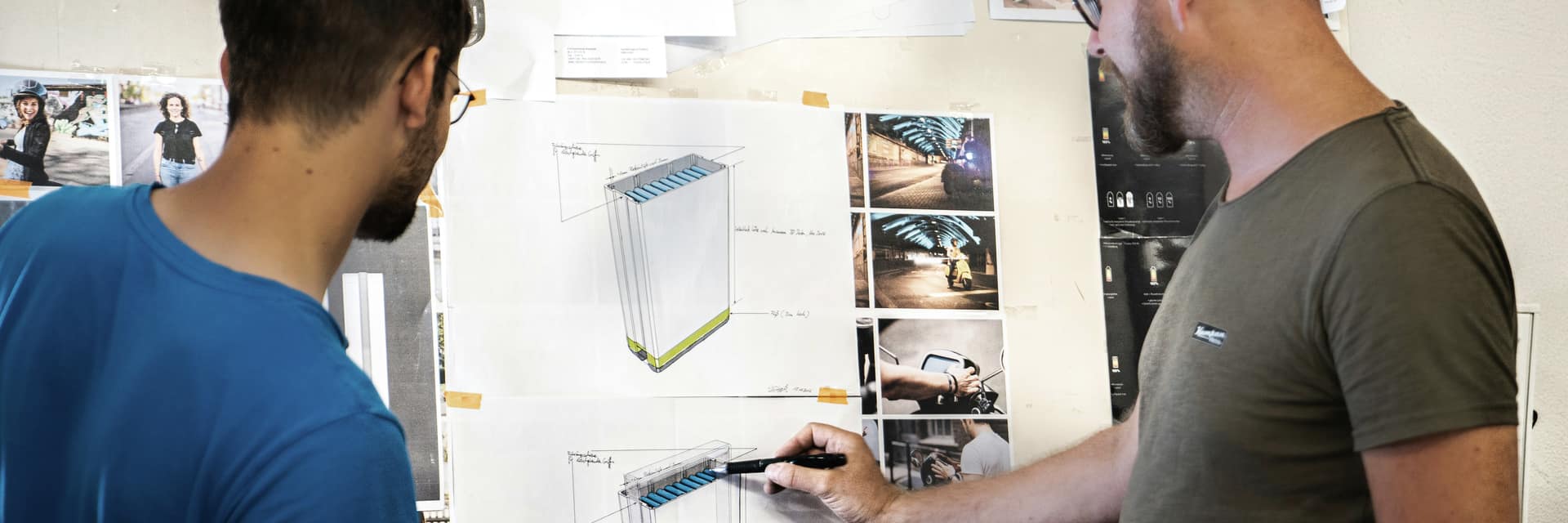
Two engineers reviewing battery design drawings pinned to a wall

Project structure

How the project is organised

RELiVE runs from April 2026 to 2030 and is organised in 9 work packages, from circular vehicle platform design to full physical demonstrators of the electric drive, led by CRF, IFPEN, Forsee Power, FEV, Mondragon University and Zabala Innovation.

Nine work packages

WP1

Lead: CRF (Centro Ricerche Fiat)

Fully circular design and development of vehicle modular platform

WP1 will define the foundations of the RELiVE modular and circular vehicle platform. Starting from market needs and user requirements, the partners will establish the technical, economic and sustainability requirements for the LONGLIFE and SECONDLIFE concepts. The WP will design a scalable ePowertrain architecture enabling easier maintenance, repair, upgrading and second-life use, while defining circular design principles, standards and the validation strategy for the project's technologies and demonstrators.

WP2

Lead: IFP Energies nouvelles (IFPEN)

Extended lifetime eDrives

WP2 will develop a new generation of modular, repairable and longer-lasting electric drive systems. The partners will investigate the ageing and degradation of critical eDrive components and develop innovative eMotors and inverters designed to reduce material use and facilitate maintenance, dismantling and refurbishment. Advanced sensors, health monitoring and Digital Product Passport solutions will also be integrated before assembling and validating the complete eDrive prototype.

WP3

Lead: Forsee Power

Extended lifetime battery packs

WP3 will develop modular, circular and long-lasting battery packs that can be more easily repaired, dismantled and reused. The work will explore innovative battery architectures and chemistries, including hybrid battery concepts, alongside advanced strategies to optimise battery performance and limit degradation. Health monitoring, ageing models and Digital Product Passports will support predictive maintenance and second-life applications before the final modular battery pack is assembled and validated.

WP4

Lead: FEV

Intelligent monitoring and control to extend EV lifetime and prospective/prescriptive maintenance

WP4 will develop the intelligent monitoring and maintenance solutions at the heart of RELiVE. By combining real-time sensor data, physical models and data-driven approaches, the partners will continuously assess the health and remaining lifetime of critical ePowertrain components. Predictive algorithms and smart control strategies will help anticipate degradation, adapt vehicle operation and recommend maintenance actions before failures occur, ultimately extending vehicle lifetime and reducing downtime and maintenance costs.

WP5

Lead: Mondragon University (MGEP)

Full physical demonstrator validation

WP5 will bring together and validate the technologies developed across RELiVE through the project's two main demonstrators. The LONGLIFE demonstrator will validate an ePowertrain designed for at least 50% longer lifetime, while SECONDLIFE will demonstrate the integration of reused and refurbished components into a reliable and cost-effective ePowertrain. Both concepts will be tested under representative laboratory conditions to assess performance, durability, circularity, health monitoring and Total Cost of Ownership at TRL 6.

WP6

Lead: Zabala Innovation

Communication, dissemination and stakeholder engagement

WP6 will build RELiVE's visibility and stakeholder community and ensure that project activities and emerging results reach the appropriate audiences. It will coordinate the project website, social media, communication materials, videos, press activities and participation in external events, while supporting scientific dissemination, clustering and collaboration with relevant European initiatives. Stakeholder engagement activities will connect RELiVE with industry, researchers, policymakers, circular economy actors and other relevant communities throughout the project.

WP7

Lead: Zabala Innovation

Exploitation, market uptake and final dissemination

WP7 will focus on transforming RELiVE's results into long-term scientific, industrial and societal impact. As technologies mature, the WP will identify and assess the project's Key Exploitable Results, address intellectual property and market opportunities, and develop exploitation and business pathways for their uptake after the project. Final dissemination activities, policy recommendations, stakeholder events and the RELiVE Final Showcase will support the transfer of validated technologies towards industry, policymakers and other potential adopters. The WP will also explore opportunities for follow-up funding, collaboration and replication of RELiVE solutions.

WP8

Lead: Mondragon University (MGEP)

Project management and coordination I

WP8 will ensure the effective administrative, financial, scientific and technical coordination of RELiVE during the first phase of the project. It will establish the project's governance, internal procedures, quality assurance, risk management and data management framework, while monitoring progress against the Grant Agreement. The WP will also coordinate consortium meetings, reporting and communication with the European Commission, ensuring effective collaboration between all partners.

WP9

Lead: Mondragon University (MGEP)

Project management and coordination II

WP9 will continue the administrative, financial and scientific coordination of RELiVE during the second half of the project, with increased attention to technology integration, demonstration and project closure. It will monitor technical and financial progress, risks, deliverables and milestones, coordinate reporting to the European Commission and ensure that the consortium successfully completes its contractual commitments and project objectives. The WP will also oversee final data management, quality assurance and the administrative closure of RELiVE.